
India's markets regulator Sebi has launched 'Demat 2.0', a pilot project for tokenisation of corporate bonds, enabling atomic settlement through integration with RBI's wholesale CBDC. This new market infrastructure uses Distributed Ledger Technology (DLT) to make bond issuance, trading, and settlement faster and more efficient. India is the first country to issue corporate bonds natively on a distributed ledger with central bank digital currency settlement. Additionally, RBI Governor announced new UPI innovations: 'Tap & Pay' for faster POS transactions and MyUPI, an AI-powered customer support solution.

The Indian corporate bond market witnessed a significant surge, with companies raising nearly Rs 16,000 crore in a single day, primarily led by state-owned financial institutions and NBFCs. This strong momentum, driven by improved borrowing conditions and investor confidence, is expected to persist.

Only a limited set of investors should invest directly in corporate bonds.

A neutral monetary policy stance, heavy government borrowing, and issuers adjusting to a higher-for-longer yield environment have set the stage for a largely stable corporate bond market in 2026.
India's corporate bond market, driven by public sector undertaking (PSU) banks and financial institutions last year, is losing momentum since the second quarter of FY26.

Markets regulator Sebi has launched a centralised database portal for corporate bonds in a bid to create a single, authentic source of information on such securities. The portal -- Bond Central-- has been developed by Online Bond Platform Providers Association (OBPP Association) in collaboration with Market Infrastructure Institutions (MIIs) comprising stock exchanges and depositories.

'When interest rates rise, the NAVs of these funds will fall.' However, they won't fall as much as longer-duration funds.

Foreign investment in bonds issued by Indian corporates touched a 10-year high in May at 20,996 crore, driven by $3.35 billion fundraise by the Shapoorji Pallonji (SP) group, which saw infusion from Deutsche Bank, BlackRock, Morgan Stanley, Davidson Kempner, and Cerberus Capital, among others. The SP group sold three-year bonds, offering 19.75 per cent yield compounded annually and payable at maturity.
Corporate bond issuances fell by around 22 per cent in August, despite easing yields as issuers delayed raising funds awaiting the US Federal Reserve to start cutting interest rates from this month. Corporates and financial institutions expect yields to fall further and borrowing costs to become cheaper, said market participants. The US Fed is widely expected to cut interest rates by 25 bps in the 17-18 September meeting, marking the start of a downward interest rate cycle.
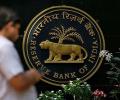
Reserve Bank of India Deputy Governor Rohit Jain has stated that India cannot rely solely on bank balance sheets to fund the extensive investment required for its 'Viksit Bharat' (developed India) goal by 2047, emphasising the critical need for deeper corporate bond, foreign exchange, and derivatives markets.

HSBC has emerged as the leading international bank in facilitating fundraising for Indian companies through bonds, syndicated loans, and IPOs during January-September 2026, according to Hitendra Dave, CEO of HSBC India.

Reliance Industries Ltd (RIL) has successfully raised a total of Rs 25,000 crore through domestic bond issues in September, including a recent Rs 13,000 crore 10-year bond at 7.90 per cent, as it prioritises funding certainty amidst expectations of a possible RBI rate hike and rising borrowing costs.

'Treating stock brokers as merchants for MDR is fundamentally misplaced.'
Bank lending to companies is expected to go up in the coming quarters because the difference in interest rates between corporate bonds and bank loans has narrowed. In addition, recent policy reforms by the Reserve Bank of India (RBI), including allowing domestic banks to do acquisition financing, are expected to give further support to corporate lending, analysts said.
Banks are preferring instruments with higher premium over government securities for their held-till-maturity (HTM) portfolio, following the new investment norms, which came into effect from April 1. They are stocking up on corporate bonds and state government securities to boost yield on their portfolio, according to market participants. "Definitely, if there is a good spread available and without lower credit risk, those instruments will be favoured to boost the yield on the portfolio.

India's deposit growth has reached a 15-year high of 17.8 per cent, primarily driven by a surge in foreign currency non-resident (bank), or FCNR(B), deposits. This influx of funds is expected to lead to a softening of corporate loan rates as banks seek to deploy their excess liquidity.

Finance Minister Nirmala Sitharaman has urged the Reserve Bank of India to accelerate its central bank digital currency initiatives, emphasising the need to sharpen capabilities with the digital rupee amidst rapid advancements in tokenisation, agentic AI, and quantum computing. She also highlighted critical concerns regarding cybersecurity, warning that autonomous AI systems are evolving rapidly and require robust safeguards. Sitharaman proposed a federated industry platform to give India's technology ecosystem a collective international voice.

Foreign portfolio investors (FPIs) have withdrawn nearly Rs 5,109.21 crore from Indian government securities under the fully accessible route (FAR) in just three days, driven by global uncertainty, elevated crude prices, rising US Treasury yields, and a depreciating rupee.

The capital market regulator would soon write to the Reserve Bank of India to allow repos in corporate bonds, which were expected to boost the liquidity in the corporate debt market, said sources. In a repo trade, a market participant pledges a corporate paper in exchange for funds for a specific period and at a rate determined by the market.
The observations are a part of the recently released edition of Asia Bond Monitor, a semiannual publication, which includes a theme chapter on Indian bond market. Lee said that securitization has a long history in India but the development has been slow and limted to a few asset types.

According to experts, due to reduction in withholding tax, FIIs' investment in corporate bonds will pick up.

Mumbai Mayor Ritu Tawde has been fined Rs 1,000 by a city court for her repeated non-appearance in a 10-year-old assault case. The court warned that failure to appear at the next hearing on November 2 for framing of charges could lead to a warrant and cancellation of bail bonds. The case stems from a 2016 incident at a BMC school.
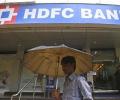
HDFC Bank has initiated an internal enquiry into the alleged leak of confidential information by two senior executives, with investigators examining whether the disclosed information was misused.

With a new government in place, the outlook on economy and political stability has improved

A Kolkata-based lottery firm, Tiger Associates, donated Rs 260 crore to Tamil Nadu's DMK and AIADMK in 2025-26, significantly increasing its contributions from the previous financial year. The firm accounted for nearly 74% of the combined contributions reported by the two parties, highlighting a concentration of political funding. The disclosures also revealed contributions from electoral trusts and a link between Tiger Associates' partner and lottery magnate Santiago Martin, whose other firm was a major electoral bond purchaser.

Sustained selling by foreign investors is weighing on domestic equities, with the benchmark Sensex and Nifty 50 down 15.60 per cent and 14.4 per cent, respectively, this year.
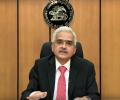
The RBI on Friday said it will give banks Rs 1 trillion through targeted long-term repo operations (TLTROs), of up to three-year maturity, to deploy in "investment-grade corporate bonds, commercial paper, and non-convertible debentures over and above the outstanding level of their investments in these bonds as of March 27, 2020."

A sluggish industrial growth has impacted the corporate bond market, too.
The Securities and Exchange Board of India (Sebi) on Monday relaxed rules for corporate bond issuances by allowing debt instruments below the investment grade to collect funds through public and rights issuances.

A prayer meet was held in Mumbai to honour Nana Patekar, with Rohini Hattangadi, Shivaji Satam and Maharashtra FDA Commissioner Tukaram Mundhe attending to pay their respects.

Budget 2011-12 is likely to announce significant measures to deepen the corporate bond market. Among the several measures on the government's agenda is allowing banks to provide guarantees for bonds issued by companies.

Investors are set to monitor quarterly earnings, crude oil prices, the Jio Platforms initial public offering, and foreign investor activity in the upcoming holiday-shortened week, according to market analysts.
According to the National Securities Depositories data, the outstanding debt comprising government corporations' bonds and bank bonds, is worth Rs 3.70 lakh crore.

Government aims to invest $1 trillion in the infrastructure sector in the 12th plan.

From Baadshah to Happy Patel: Khatarnak Jasoos, these spy comedies prove that espionage can be a laughing matter, even when promising premises go sometimes spectacularly off course.

The Reserve Bank of India's recent measures, including a dedicated dollar window for state-run oil marketing companies and tightened foreign exchange derivative rules, are expected to provide near-term relief to the rupee's depreciation, but market participants believe global factors and balance of payment dynamics will continue to exert pressure in the medium term.

Indian stock markets witnessed a significant rebound, with the Sensex rallying 1,109 points and the Nifty closing above 22,720, driven by strong performances in IT and financial sectors, a recovering rupee, and Finance Minister Nirmala Sitharaman's comments on long-term capital gains (LTCG) tax.

'Ultimately, banks are a channel for people to get some long-term return, and this means banks need to adjust their asset-liability mismatch.' 'Customers also need long-term deposits, say those of three-five years. How would they get them if returns on those deposits do not climb?' 'Otherwise, on fixed deposits, a senior citizen doesn't get anything.'

The Indian Army has launched 'Bharat Rice', a superior-quality rice for defence forces, aimed at improving ration quality and logistics. This initiative, spearheaded by the Directorate General of Supplies and Transport, involves direct supply to Army Supply Depots, including remote areas, and an MoU with FCI for infrastructure utilisation during contingencies. Defence Minister Rajnath Singh highlighted its significance for soldier welfare, operational readiness, and national security, emphasising logistics as combat power.
